If you experience itchy ears, you’re far from alone. Itchy inner ears, itchy ear canals, and general ear itching are extremely common issues seen by hearing specialists. While many people describe their ears as simply feeling “a bit itchy”, recurring irritation inside the ear can sometimes point to an underlying issue that needs attention.
In this guide, we’ll explore the most common reasons ears become itchy and how to prevent itchy ears safely and effectively. From dry skin and earwax buildup to ear infections, allergic reactions, and even hearing aid-related issues, there are many causes of itchy ears. Understanding what’s behind the irritation is key to finding relief and knowing when to seek medical attention.
For expert ear care guidance and support, book an appointment with our experienced team at South East Hearing Care Centres, and our audiologists will help find the best solutions, tailored to your needs.
Please contact your local branch: Horsham on 01403 218 863, Chichester on 01243 774 536, Bexhill on 01424 733030, Eastbourne on 01323 726352, or Seaford on 01323 899 655.
What’s typical vs when to be concerned
Itchy skin inside the ear is very common and often linked to everyday causes such as dry skin, mild irritation, soap residue, changes in the weather, or the natural movement of earwax. Because the skin of the outer ear and ear canal is especially delicate, brief itching that settles on its own is usually nothing to worry about.
That said, it’s sensible to seek advice if the itching:
- Persists or gradually worsens
- Is accompanied by ear pain
- Comes with discharge, redness, or swelling
- Is linked with hearing changes, balance difficulties, dizziness, or bleeding
These signs can sometimes be associated with infection, inflammation, wax buildup, or skin conditions, and a professional check can offer reassurance and appropriate care.
Understanding the structure of the ear
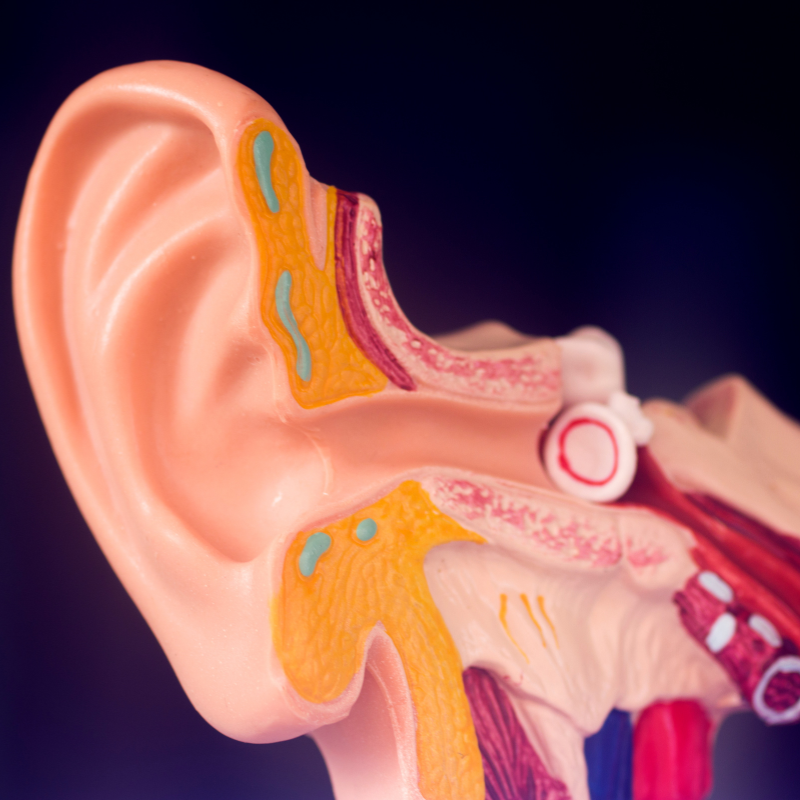
Before we delve deeper into the common causes of itchy ears and why itching happens, it helps to know how the ear is structured:
- The outer ear includes the visible ear and the ear canal.
- The middle ear contains the tiny bones that transmit sound.
- The inner ear controls balance and hearing and connects to the brain via the eustachian tube.
Most itching starts in the external ear and ear canal, where the skin is thin, sensitive, and vulnerable to moisture, wax, allergens, and irritation.
Common causes of itchy ears
Itchy ears are a very common experience and can happen for many different reasons, most of which are harmless. For many people, this can feel like a mild tickling, tingling, or crawling sensation or an urge to scratch inside the ear.
Below are some of the more frequent causes people experience:
1. Dry skin and flaky skin in the ear canal
One of the most common causes of itchy ears is dry skin. When natural oils are stripped away, the ear canal skin can become tight, itchy, prone to cracking, and vulnerable to dead skin cells and skin cell buildup.
People with sensitive skin, eczema, psoriasis, or ear eczema are more susceptible to dryness in the ear canal. As a result, they may experience:
- Dry ears
- Flaky skin
- Scaly ear skin
- Persistent itchy sensations
Keeping the skin in and around the ear canal healthy and well cared for can play a key role in reducing this type of irritation.
2. Ear wax buildup and wax blockage
Although earwax is essential for protecting the delicate inner skin, excess earwax can trap moisture and debris. Earwax buildup or wax buildup often leads to:
- A feeling of fullness
- Dull hearing
- Persistent ear itching
- Pressure inside the ear canal
When wax hardens into an earwax blockage, it can cause discomfort and increase the risk of infection. Many people try to soften earwax or safely remove it themselves using cotton buds, which can make the blockage worse.
At South East Hearing Care Centres, we offer earwax removal services, including microsuction and irrigation methods.
3. Outer ear infection (Otitis externa/Swimmer’s ear)
Otitis externa, often called swimmer’s ear, is one of the most common causes of itchy ear canals. It affects the outer ear and ear canal and is usually triggered by:
- Trapped moisture
- Scratching with cotton buds
- Swimming
- Broken skin
Early symptoms often begin with itching before progressing to:
- Increasing ear pain
- Swelling
- Redness
- Discharge
In more advanced cases, swelling inside the ear canal can affect hearing, which can feel worrying. Treatment may include medicated ear drops and careful moisture management, and with the proper care, symptoms typically settle well.
4. Fungal infections of the ear
A fungal infection inside the ear canal often causes:
- Intense itching
- Thick discharge
- Scaling and crusting
- Blocked sensations
These infections most commonly occur after repeated antibiotic use or prolonged moisture in the ear. Treatment may include antifungal ear drops if needed, along with professional advice on keeping the ear clean and dry.
5. Middle ear infections (Otitis media)
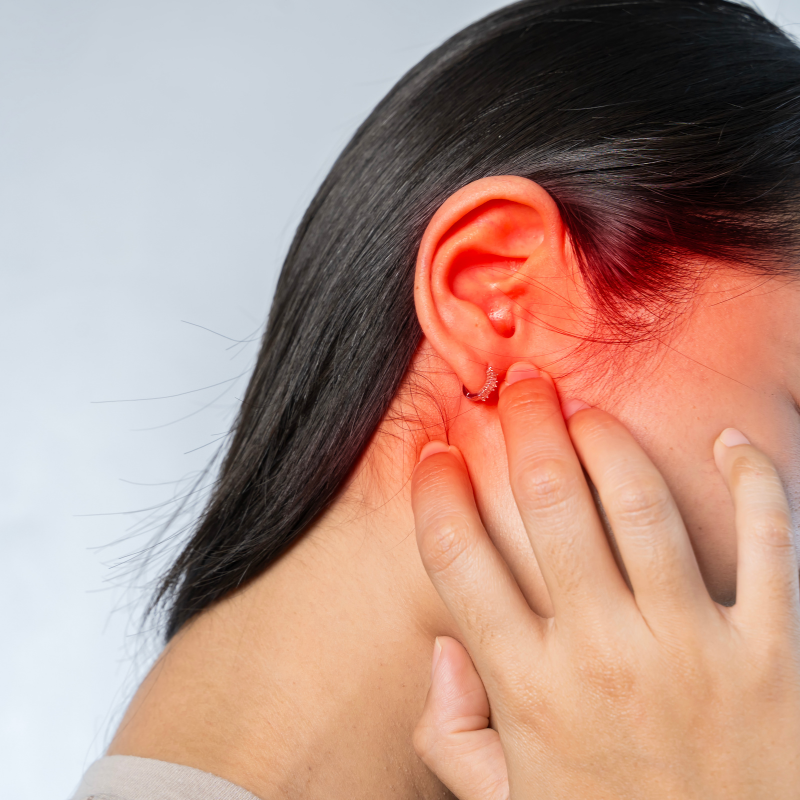
A middle ear infection occurs behind the eardrum, near the tiny bones that transmit sound. Itching is not usually the main symptom, but may accompany:
- Pressure
- Deep pain
- Fever
- Hearing changes
Children are more prone to middle ear infection, and antibiotics are usually prescribed orally rather than as drops.
6. Allergic reactions and contact dermatitis
An allergic reaction affecting the ears may be caused by:
- Hair products
- Skincare
- Shampoos
- Metal jewellery
- Ear piercing
- Hearing aid materials
This type of reaction, known as allergic contact dermatitis, can lead to swelling, redness, itching, and burning sensations. People with hay fever, food allergies, and conditions such as oral allergy syndrome may be more prone to experiencing allergic ear symptoms.
7. Hearing aids and ear devices
People wearing hearing aids may experience itching due to:
- Moisture trapping
- Poor fit
- Wax accumulation
- Material sensitivity
Improperly fitted devices can rub against the delicate skin inside the ear, triggering irritation and inflammation. Routine cleaning and fit adjustments by your audiologist are essential for long-term comfort.
If you’re experiencing any issues with your hearing aids or would like to explore upgrade options, our team can provide expert hearing aid solutions and access to a wide range of leading hearing aid brands.
How to prevent itchy ears
Preventing itchy ears often comes down to adopting a few simple, everyday habits that help protect the delicate skin inside the ear. The tips here can support ear health and reduce the risk of recurring itching.
| Prevention Tip | Why It Helps |
|---|---|
| Avoid inserting anything into the ear canal (including cotton buds) | Prevents skin damage, irritation, and pushing wax deeper into the ear |
| Keep ears dry after bathing (outer ear only) | Reduces moisture that encourages infection |
| Avoid harsh shampoos and soaps from entering the ear | Helps protect the ear’s natural skin barrier |
| Protect your ears if you swim frequently | Lowers the risk of swimmer’s ear |
| Use hearing aids only when clean and dry | Prevents trapped moisture and bacteria |
| Manage allergies during hay fever season | Reduces allergic ear irritation |
| Never attempt to treat suspected ear infections at home | Ensures safe and appropriate medical care |
By building these simple habits into your routine, you can help keep your ears comfortable and less prone to irritation over time.
When to seek professional help for itchy ears
If your ears continue to feel itchy for more than a few days, become increasingly uncomfortable, or you simply feel worried, it’s a good idea to seek professional advice for reassurance and guidance. Ongoing or recurring itchiness can sometimes be linked to issues such as dry skin, ear eczema, wax buildup, or allergies, which benefit from proper assessment and tailored care.
If you wear hearing aids and notice irritation, a routine fit and hygiene check can often resolve the problem quickly and comfortably. Likewise, if there are signs of infection, blocked wax, or visible skin changes in or around the ear, a professional examination helps ensure safe assessment, appropriate treatment, and referral if needed.
Summary
Itchy ears are very common and can occur for many reasons, including dry skin, changes in earwax, mild outer ear infections, allergies, or irritation from hearing aids and other devices. In many cases, the itching is temporary and settles on its own with simple care and awareness.
By looking after your ear health with small everyday steps, such as avoiding cotton buds, keeping ears dry, managing allergies, and dealing with wax safely, you can significantly reduce irritation. With the proper care and support, most causes of itchy ears can be handled comfortably and effectively.
Book an appointment with South East Hearing Care Centres
If you’re experiencing ongoing itchiness, discomfort, or blockage symptoms, the team at South East Hearing Care Centres can professionally assess your ears and treat the issue safely with modern, clinically approved treatments.
To book an appointment, contact us at your nearest branch today.
Itchy ears FAQ
Why do my ears itch inside but don’t hurt?
This is commonly due to dry skin, early infection, mild earwax buildup, or allergic irritation affecting the sensitive skin inside the ear canal. These issues often cause irritation without triggering pain at first. If the itching is persistent, worsening, or associated with other symptoms, it should be evaluated by a healthcare professional.
Can using cotton buds make itchy ears worse?
Yes, using cotton buds in the ears can often make itching worse rather than better. They can remove the ear’s natural protective oils, push wax deeper into the ear canal, and damage the delicate skin lining the ear canal. This significantly increases the risk of irritation, infection, and earwax blockage.
Is an itchy ear a sign of an ear infection?
It can be, especially in the early stages of an outer ear infection. Conditions such as otitis externa (swimmer’s ear) and fungal infections often start with itching before pain or discharge develops. If itching is accompanied by discomfort, swelling, fluid, or hearing changes, professional assessment is strongly advised.